The introduction of new technologies at St Mark’s and advances in disease understanding realised through St Mark’s Hospital Foundation-supported research will allow clinicians to better assess individual cancer, and cancer recurrence, risk to personalise surveillance and treatment pathways.
Clinicians at St Mark’s have already brought genomic medicine into clinical practice, and researchers continue to study how an individual’s genome can more accurately predict their risk of developing diseases like IBD and colorectal cancer. Using genomic medicine to determine an individual’s risk of bowel disease and predict their response to treatment allows for more personalised surveillance and tailored interventions.
Predicting Cancer Risk in Patients with Inflammatory Bowel Disease
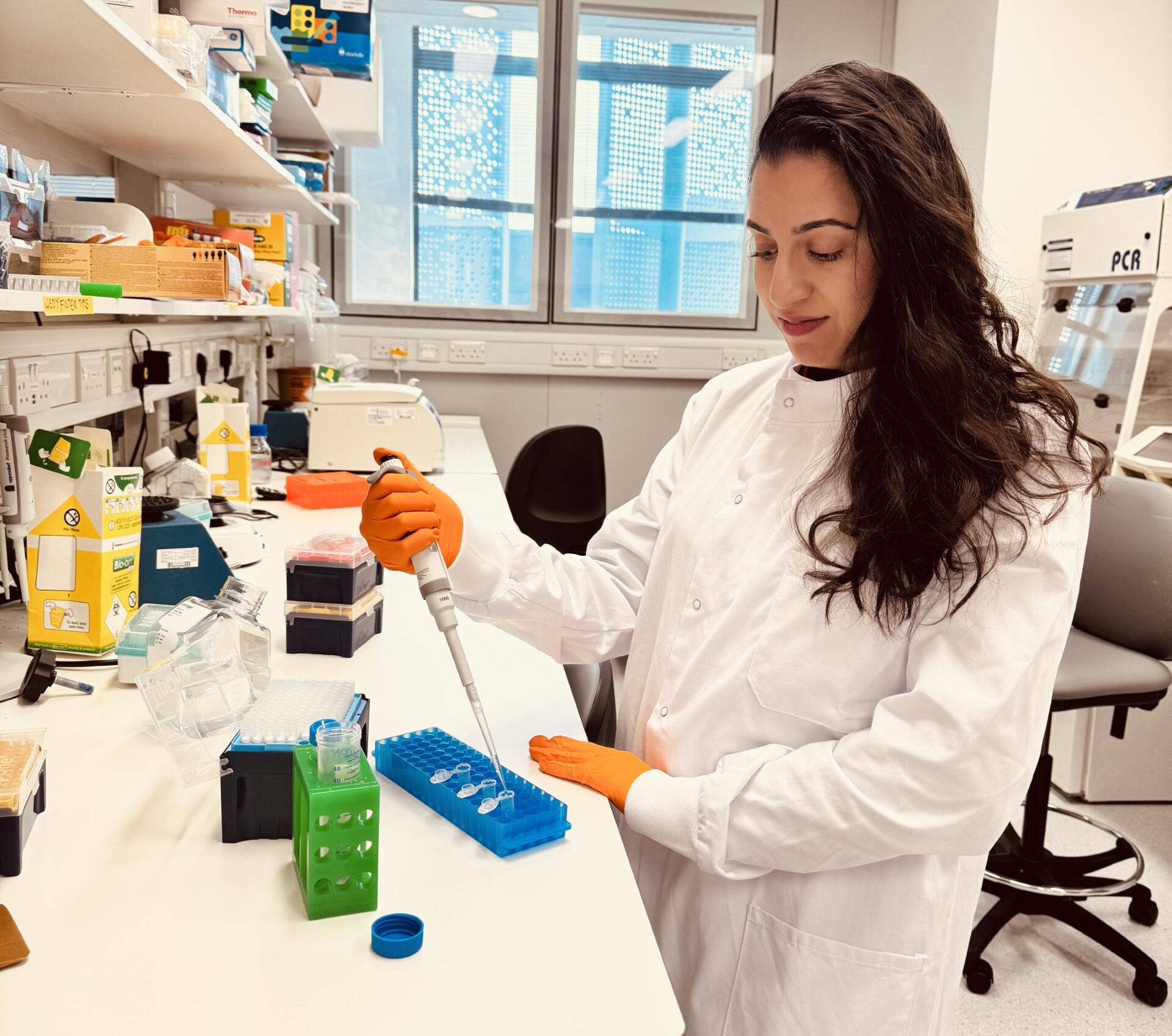
People living with Inflammatory Bowel Disease affecting their large bowel are around twice as likely to develop bowel cancer in their lifetime. Because of this, patients are forced to make life-changing decisions to try and mitigate this risk, whether by undergoing major surgery or entering long-term intensive colonoscopy surveillance programmes.
In 2024, a part Foundation-funded collaborative project between St Mark’s and the Institute of Cancer Research successfully identified a genomic marker present in colonoscopy biopsy specimens that appears highly accurate in predicting future cancer risk in Inflammatory Bowel Disease patients. Since the publication of this work, the team has been working to prove the clinical benefit of testing for this genetic marker as part of the NHS bowel cancer screening service and thereby move the findings into clinical practice across the UK and, potentially, around the world.
The Foundation is currently supporting St Mark’s research fellow, Dr Diya Kapila, who is taking the exciting next phase of this work forward. Her research is exploring whether this genetic marker could be detected through methods other than colonoscopy, such as through a blood or stool test. By looking to develop new ways to accurately predict cancer risk in patients with Inflammatory Bowel Disease, Dr Kapila aims to make surveillance more personalised, and far less invasive, for patients in the future.
The Lynch Syndrome Transformation Project
St Mark’s Hospital Foundation is proud to support research taking place in The St Mark’s Centre for Familial Intestinal Cancer, a multidisciplinary service that ensures prompt diagnosis and surveillance of patients with a genetic condition associated with bowel cancer or from a family at high risk of bowel and other cancers.
The St Mark’s Centre for Familial Intestinal Cancer is a UK leader in genetic testing for Lynch, a syndrome characterised by inherited genetic alterations which predispose people to bowel, and other forms of, cancer. The Centre was integral to the creation of an English National Lynch Syndrome Registry that is expected to enable systematic risk-reduction on a scale unprecedented worldwide.
In 2026, the project team, led by St Mark’s Consultant Gastroenterologist, Professor Kevin Monahan, reported a 255% improvement in Lynch syndrome diagnosis across England over the last four years. Finding people who have Lynch syndrome is the first step toward personalised screening pathways for cancer prevention. More diagnoses mean more opportunities for risk mitigation, early intervention, and tailored treatment options.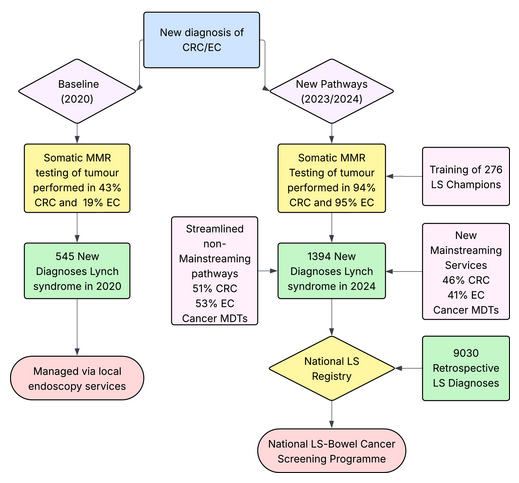
Read More About the Lynch Syndrome projects being undertaken by Professor Monahan