St Mark’s Hospital Foundation supports the implementation of new technology in the field of colorectal surgery and the development of new, less invasive, surgical techniques to treat bowel disease.
St Mark’s Hospital has a long history of pioneering new surgical techniques and championing the development of minimally invasive surgery. Minimally invasive surgery aims to improve accuracy during operations to ensure that more healthy tissue is preserved, patient recovery time is reduced, and there is a smaller risk of complications after surgery.
Surgical Robotics Research Programme
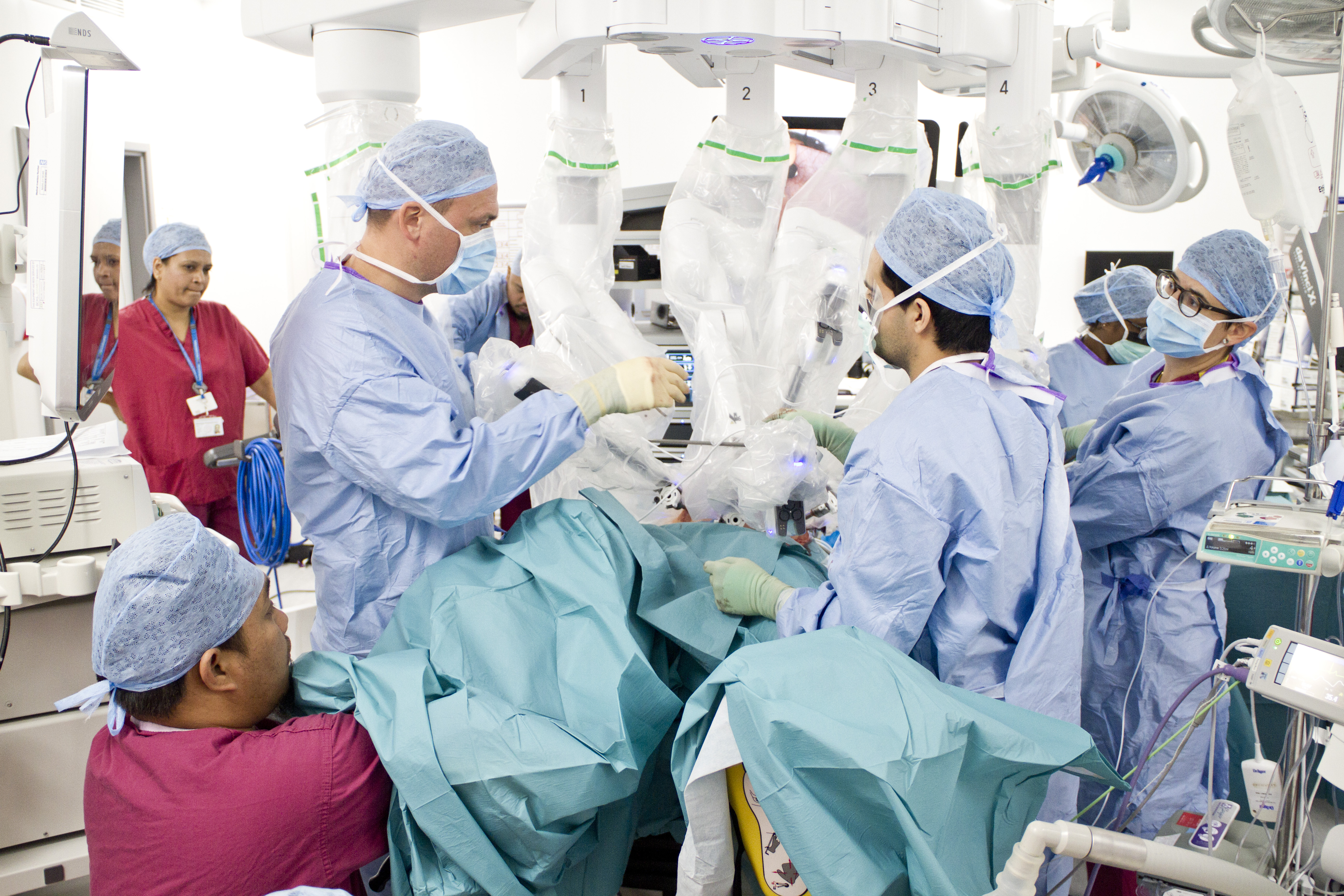
The introduction of robotics to St Mark’s surgical practice in 2018 represented a major milestone toward improving patients’ survival and health-related quality of life. At this time, robotics had not been widely researched as a tool for colorectal surgery.
St Mark’s Hospital Foundation seed funded the Programme through a dedicated fundraising campaign. With the support of our donors, we contributed more than £800,000 to the Programme, enabling the acquisition of the most advanced surgical robotics platform to date.
Our current data shows that, at St Mark’s Hospital, more than half of the bowel procedures eligible for robotic surgery are performed robotically compared to only 10% of eligible cases across the NHS as a whole. This has resulted in better post-surgery outcomes for patients across the board. Due to the success of the St Mark’s Surgical Robotics Research Programme, our NHS Trust is now looking to acquire more robotic systems.
TASER
In 2016, St Mark’s consultant colorectal surgeons, Mr Janindra Warusavitarne and Professor Brian Saunders pioneered a minimally invasive surgical technique to remove polyps from the lining of the large bowel.
Though normally benign, these tube-like growths must be removed to prevent them from becoming cancerous, and polyps are usually burnt or cut away during a colonoscopy procedure. However, the larger a polyp is, the more bowel wall must be cut away and surgically repaired. This results in an increased risk of permanent narrowing or blockages in the bowel that can lead to patients needing a stoma, a surgically-created opening in the abdomen which diverts the flow of faeces.
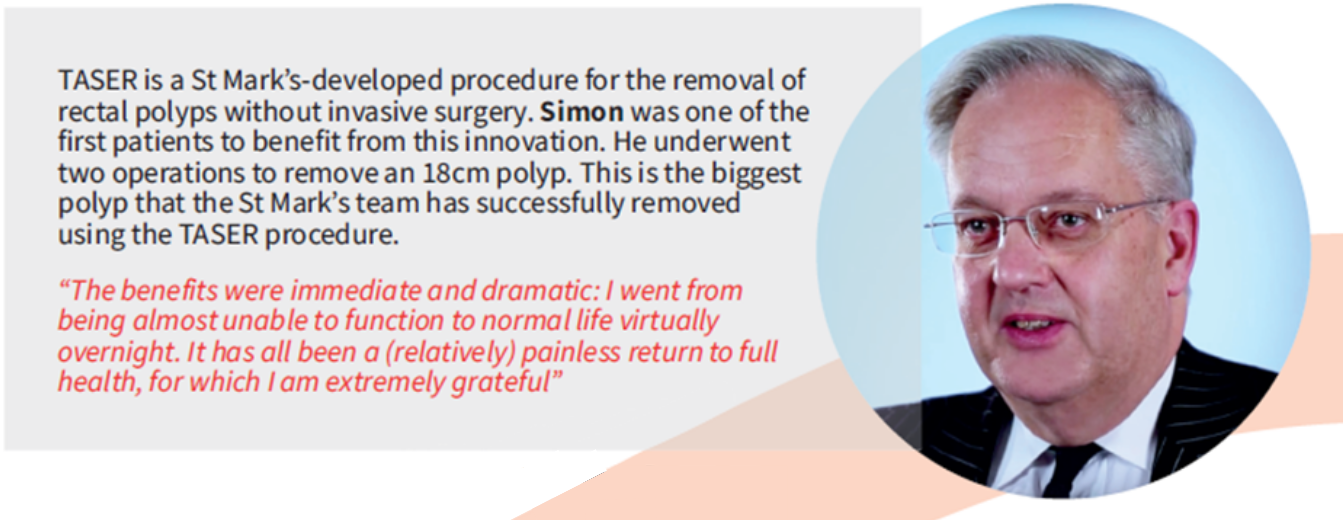
The development of TASER (Transanal Submuscosal Endoscopic Resection), allows surgeons to inject liquid between the layers of the rectal wall and avoid cutting as deeply into the bowel. This revolutionary technique has significantly reduced recovery times and resulted in fewer bowel complications after surgery.