St Mark’s Hospital Foundation supports projects that promote early diagnosis of bowel disease through less-invasive screening methods and by creating frameworks for consistent application throughout the NHS.
Early diagnosis of bowel disease is crucial for better patient outcomes. Early detection of colorectal cancer, including Inflammatory Bowel Disease-associated colorectal cancer, and cancer recurrence, has been established as one of the most effective ways to improve survival rates and quality of life.
PERFECTS
CT colonography (CTC) is a less invasive alternative to traditional colonoscopy to identify pre-cancerous and cancerous growths. However, accuracy levels for identifying these growths vary significantly across the UK.
St Mark’s Hospital Foundation-supported research aimed to address the UK-wide variability in CTC scan reporting. This work has resulted in the creation of The National CT Colonography Academy (NCTCA), which is delivering a national, standardised training programme to improve the quality, safety, and capacity of CTC services across the UK by upskilling staff.
Today, the NCTCA has been adopted into the British Society of Gastrointestinal and Abdominal Radiology and collaborates with University of Suffolk to offer the only postgraduate Certificate in CTC in the UK.
Artificial Intelligence in Diagnosing Crohn’s Disease Recurrence
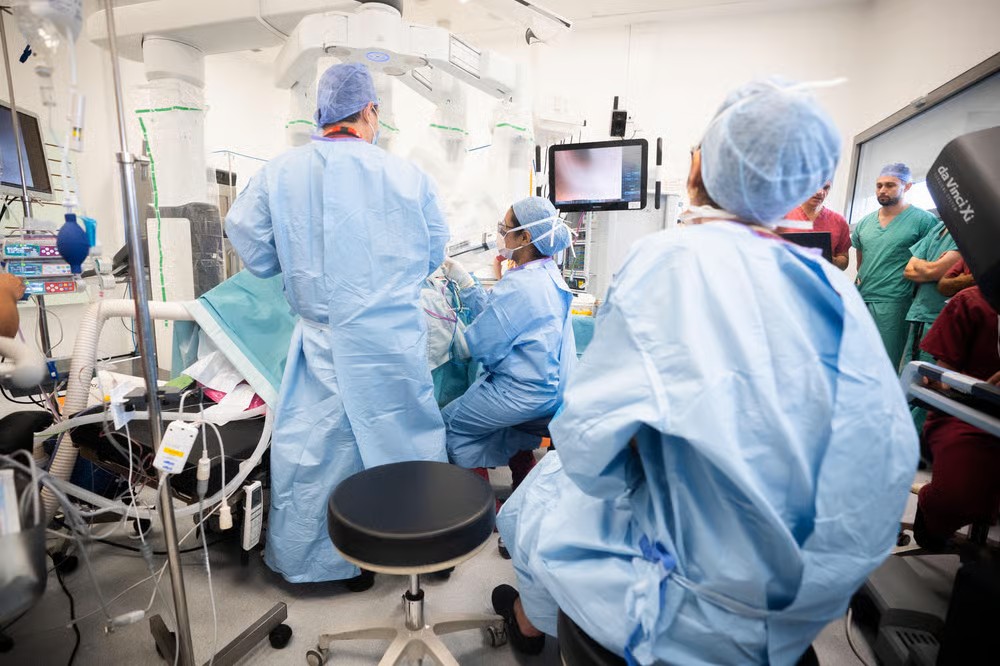
Crohn’s disease is a type of Inflammatory Bowel Disease which is lifelong and incurable. It often requires frequent hospital visits and multiple surgeries to repair or remove damaged areas of the bowel. Currently, many patients will have colonoscopies following an operation to assess if their disease has returned. This requires highly specialised endoscopists who can accurately evaluate endoscopic images.
St Mark’s research fellow, Ms Gita Lingam, is looking to develop tools using artificial intelligence to support endoscopists with diagnosing, and even predicting, Crohn’s disease recurrence. By developing smarter surveillance strategies that detect recurrence earlier, this research has the potential to significantly improve patient outcomes and quality of life.
Endoscopy+
With charitable support, the Foundation supported the purchase of equipment for training in the St Mark’s endoscopy unit at Central Middlesex Hospital. This investment helped to replace the existing equipment, which was at end of life and, therefore, significantly impacting the endoscopy team’s ability to deliver courses.
The new equipment will be used on at least 13 courses per year, giving delegates an even better training experience and disseminating best practice for the early diagnosis of bowel disease throughout the UK and the world.