Bowel cancer is the fourth most common cancer in the UK and the second leading cause of cancer deaths. While screening programmes have helped reduce cases in older adults, young people are being diagnosed at unprecedented levels. Diagnoses of under 50s are projected to double between 2010 and 2030.
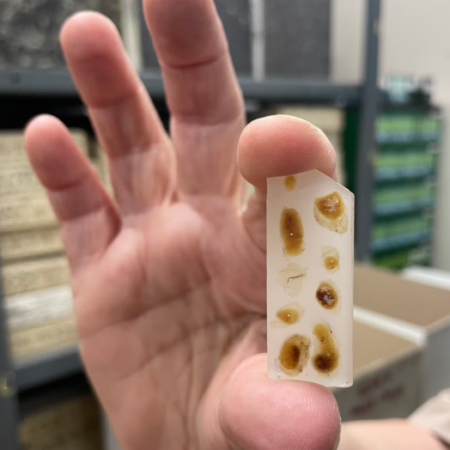
The ‘Boomers’ research programme, a collaboration between St Mark’s Hospital and The Institute of Cancer Research, is trying to figure out why. By comparing tens of thousands of archived tumor samples from St Mark’s to present day cancer cases, researchers are looking to determine whether specific environmental factors are responsible for the increase in diagnoses.
Dr Pebs Edwards is the St Mark’s clinical research fellow responsible for determining which samples are the right ones to include in the study and take to the lab for processing. In last year’s anniversary edition of Re:Mark’s, the Foundation’s annual newsletter, Pebs sat down with us for an exclusive interview. One year on, she has given us new insight into her work.

Q: How do you think you’ve grown or changed as a clinician and researcher in the last year?
Over the past year, I have grown in confidence with the way I think about bridging the gap between the clinic and the lab. I’m able to think more clearly about the unanswered research questions and how we might go about answering them, particularly in regard to risk, prevention and early diagnosis.
Q: What is exciting you most about your research right now?
I’m excited to discover that the immune system may act as an early warning system for detection of cancer. In Lynch syndrome, a cancer predisposition syndrome, we are seeing signals in blood that could potentially help us identify people at risk or detect cancer earlier, even before symptoms develop. The possibility that this could work as an early detection tool in this high-risk population is very motivating.
Q: How do you feel about the recent national (and international!) media coverage of the Boomers project?
It’s been really amazing to see the level of public interest and engagement. Early onset bowel cancer is a growing concern to many, and we want to get answers. The coverage has helped raise awareness but, also reinforces how important it is that we continue to do research in a way that is collaborative, rigorous and patient focused.
Q: Is there anything you would like to say to St Mark’s patients and supporters?
I’d like to say thank you. The research we do wouldn’t be possible without the huge generosity of patients that donate their time, samples and personal experiences. Your involvement is directly impacting our ability to move forward with this important research.