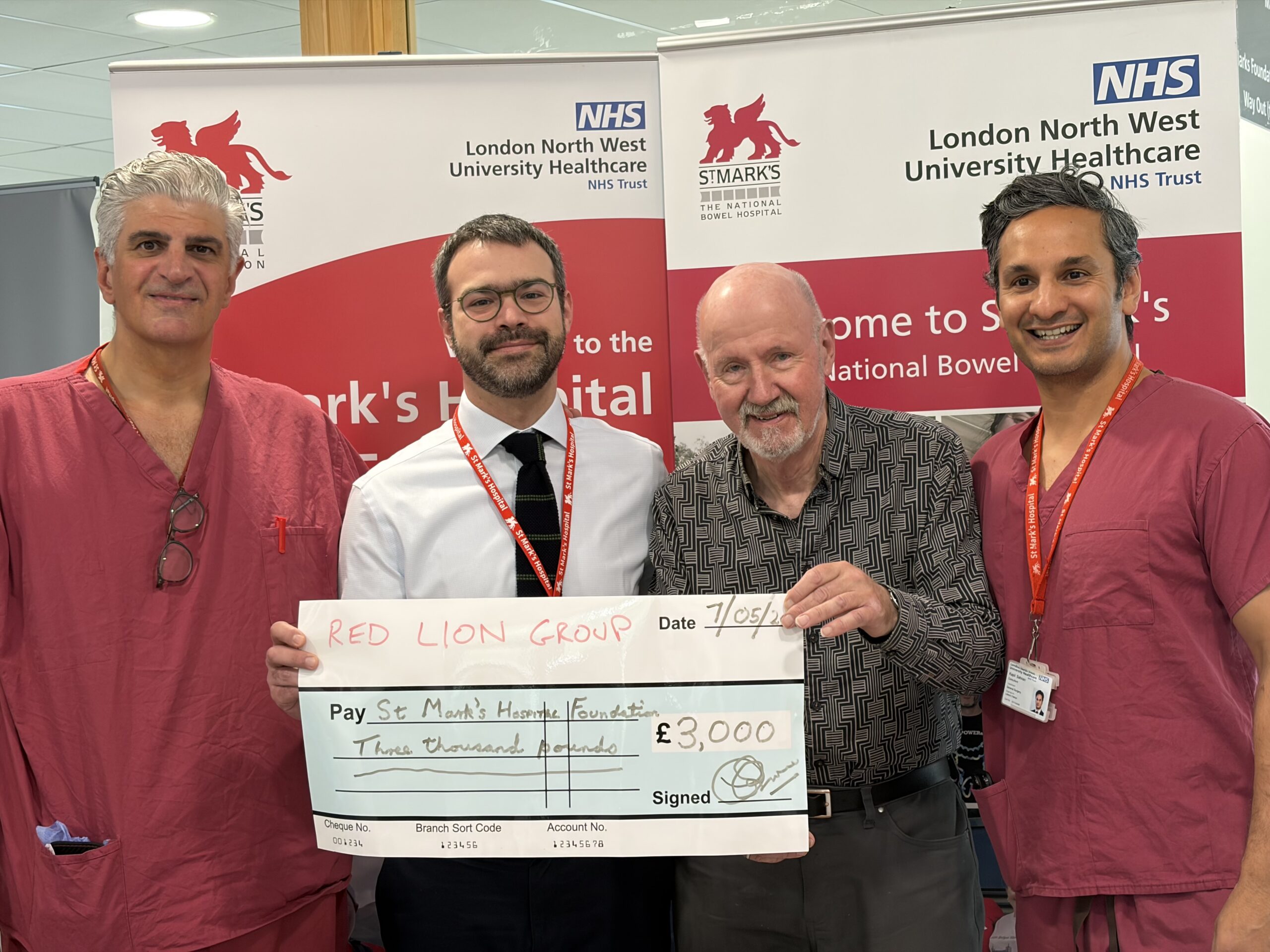
St Mark’s Hospital Foundation recently received a £3,000 donation from the members of The Red Lion Group, a patient support group for individuals who have had, or are considering J Pouch surgery.
This incredibly generous donation is to support the research of Dr Orestis Argyriou, a St Mark’s research fellow under the supervision of consultant Inflammatory Bowel Disease (IBD) surgeon, Mr Kapil Sahnan, and consultant IBD gastroenterologist, Professor Ailsa Hart.
Over the last two and a half years of his research fellowship, Orestis has taken on a number of projects with the aim of improving counselling for patients considering surgery for ulcerative colitis, one of the main forms of Inflammatory Bowel Disease.
Of the recent donation, Orestis said, “The Red Lion Group has supported this work from the very beginning. They have shown a strong interest in the projects, offered valuable feedback, and helped share information about studies recruiting patients. We are extremely grateful for this support. For us, one of the strongest signs that this research matters, is seeing that the people directly affected by these issues are interested in it and willing to engage with it.”
Improving Support for Patients with Ulcerative Colitis
St Mark’s Hospital Foundation is proud to support the work of its research fellows and help them improve clinical practice for patients globally. The goal of Orestis’s research is not to push ulcerative colitis patients toward a particular treatment choice, but to make sure individuals feel informed, supported, and able to decide what is right for them—based on clear information, realistic expectations, and their own personal priorities.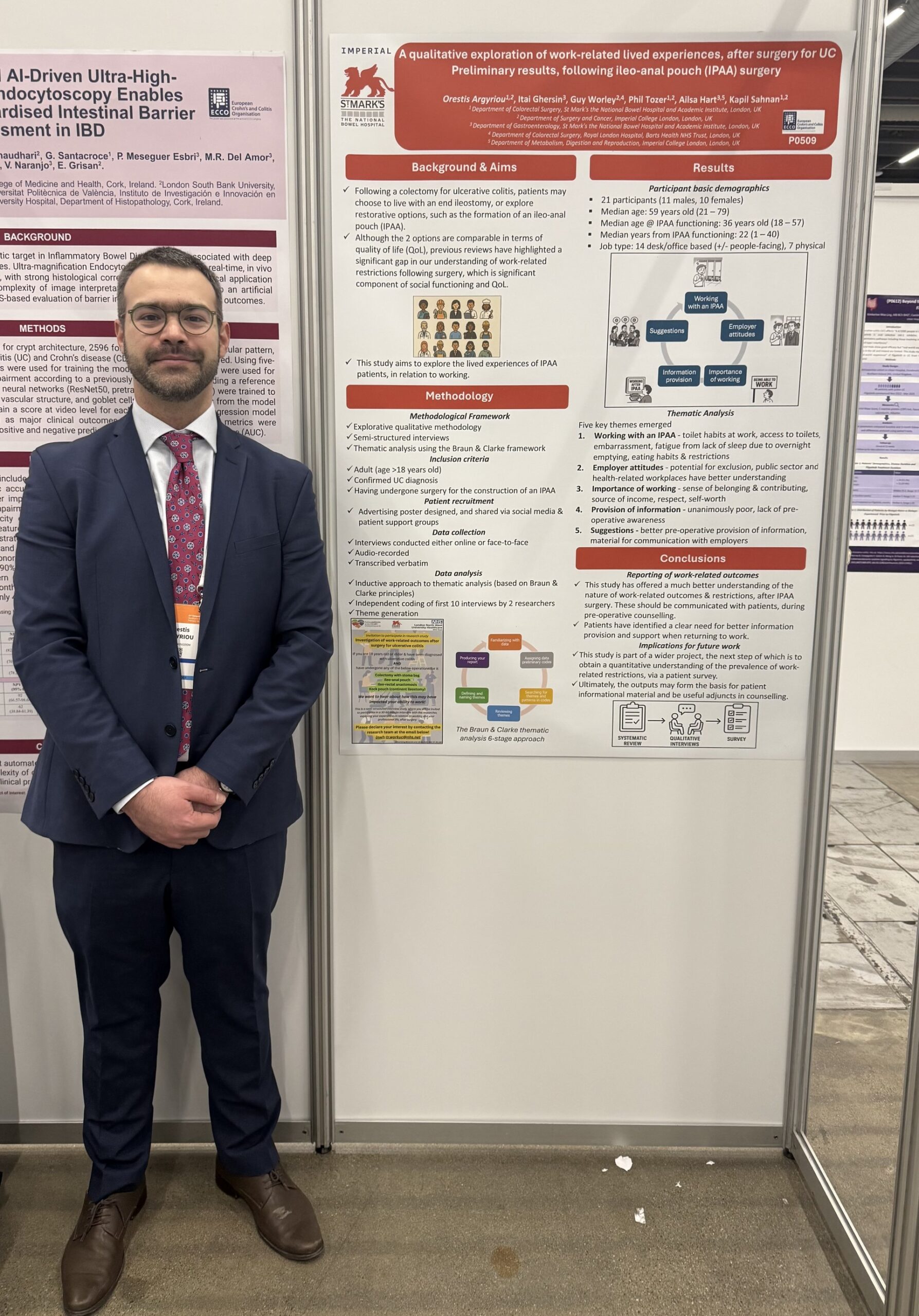
Orestis, and the rest of the research team, identified two main areas of focus. The first is improving evidence they can share with patients about potential surgical treatment options—such as likely benefits, success rates, risks and complications.
The second is understanding what matters most to patients as well as understanding the ways in which patients seek out and interpret information about ulcerative colitis treatment and surgical outcomes.
The research team has involved patient support groups from an early stage, seeking their advice and feedback as the projects developed. The research findings have already appeared in multiple publications and at international conferences. The researchers are confident that the studies will continue to produce findings that can be translated directly into everyday clinical practice and that will meaningfully improve the experience of individuals with ulcerative colitis who are considering or living with a pouch.
The Frog Study
FROG is an international collaborative study that is collecting data on fifteen years of surgical procedures for ulcerative colitis. The aim is to capture and describe the potential variations in surgical practices across Europe—and thereby identify surgical options and strategies that have better outcomes for patients.
The project currently has a total of 38 active sites which are collecting data on surgeries from 18 countries. Orestis expects the project to expand to include a total of 55-60 sites and nearly 2,000 patients—making it one of the largest collaborative surgical studies in the field to date!
Work-related Outcomes Following Surgery for UC
Orestis’s research also focuses on better understanding the lived experience of individuals in the workplace after undergoing surgery for ulcerative colitis. This research will improve support for post-operative patients and ensure better information for future patients before surgery takes place.
This study was the first to gather testimonials from patients about their workplace experiences, a significant component of their post-surgery quality of life. The research team found ways in which individuals could be better supported at work after surgery. They also identified common elements of patients’ lived experiences in the workplace that can be communicated to future patients and help them make more informed decisions about surgery.
These findings will help the team to develop resources in collaboration with key informational providers and charities that address widespread patient concerns and fill a gap in the support and information available to help individuals navigate the workplace post-surgery.
The Role of Social Media in Decisions About Surgery for UC
The final strand of Orestis’s research focuses on social media, looking into how the social media platform Tik Tok is used by individuals with ulcerative colitis to share information. The research team is taking advantage of the opportunity to observe conversations and experiences that are not limited by traditional research questions, allowing patients to highlight the issues that matter most to them in their own words.
By understanding the use of social media by patients, the team has determined what information individuals with ulcerative colitis need before making decisions about surgery and have identified meaningful opportunities for clinicians to bypass geographical boundaries to engage with patients and provide this support using social media platforms.
Importance of the Research
So far, Orestis’s projects have provided a fuller picture of the counselling process that patients with ulcerative colitis go through when making complex, individual, and often difficult decisions about surgery.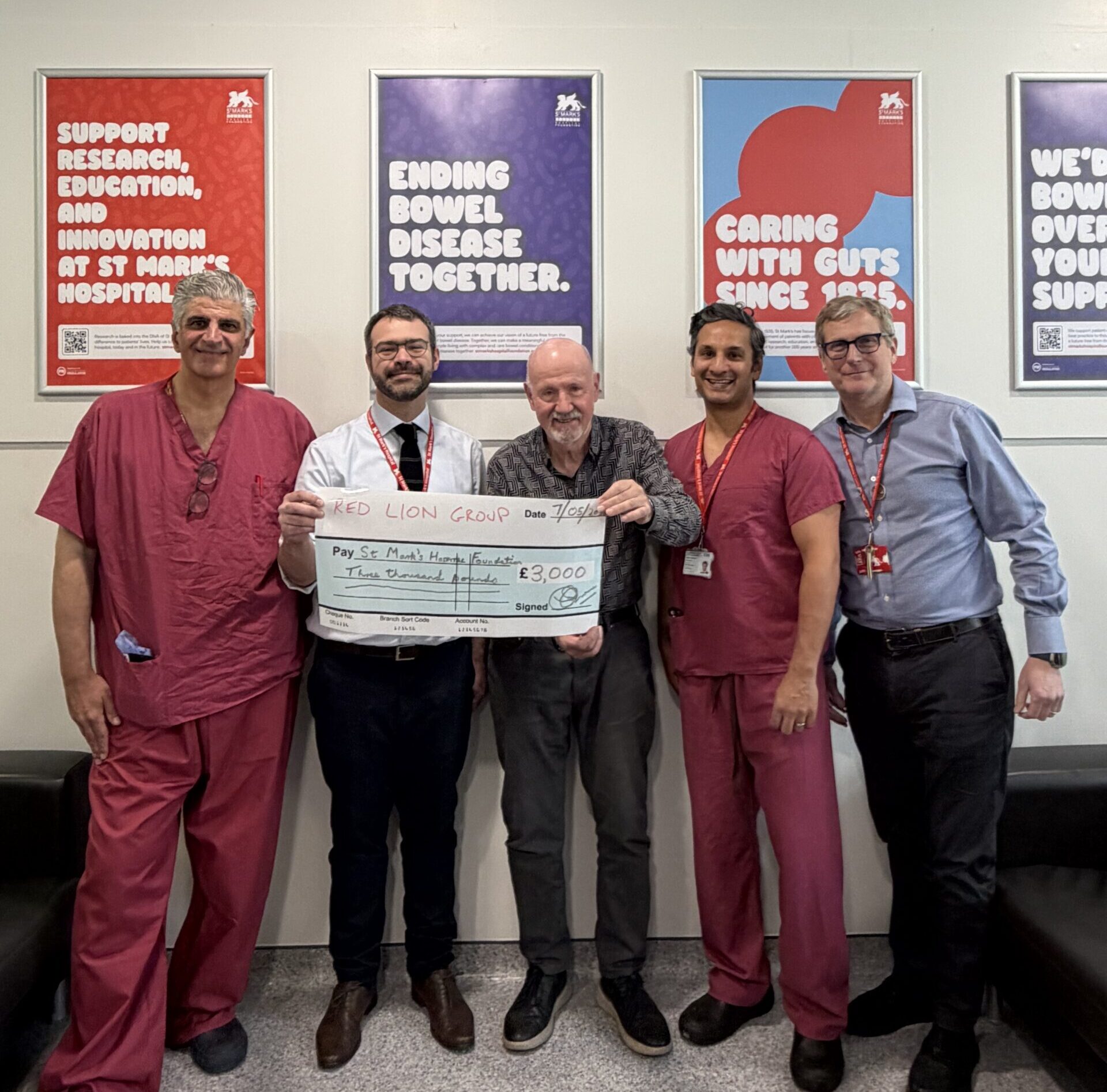
In the future, Orestis hopes to develop a “consenting checklist” for pouch surgery—a practical and standardised roadmap of what clinicians worldwide should discuss with patients during consultations when deciding on surgery, covering not only surgical risks and complications, but also the longer-term impact on their day-to-day quality of life.
On his research goals, he shared, “we are deeply committed to making this work relevant to patients’ real lives. By providing not only stronger surgical evidence, but also better answers to the practical questions about what life after surgery may actually look like, we are helping people make truly informed decisions. We are dedicated to improving counselling, strengthening support, and ensuring that patients feel better informed, better prepared and better supported throughout their journey.”
Help us Support More Research Like This
Giving just £5 a month to St Mark’s Hospital Foundation can help us to support the cost of up to 30 research fellows and advance crucial bowel disease research.