St Mark's Hospital Foundation is proud to fund cutting-edge technology and specialist equipment at St Mark’s Hospital to optimise how patients with bowel disease are diagnosed and treated.
One of our proudest achievements as a charity has been helping launch the St Mark’s Surgical Robotics Research Programme by funding the acquisition of an advanced surgical robotics platform to be used for colorectal surgery. Since then, St Mark’s has continued to embrace new technologies.
“We are a small hospital with a long history of innovation regarding bowel disease, so we should pay tribute to our predecessors by continuing to push forward.”
– Mr Kapil Sahnan, St Mark’s Consultant Colorectal Surgeon & Director of Innovation
St Mark’s Surgeons Test Exoskeleton Device
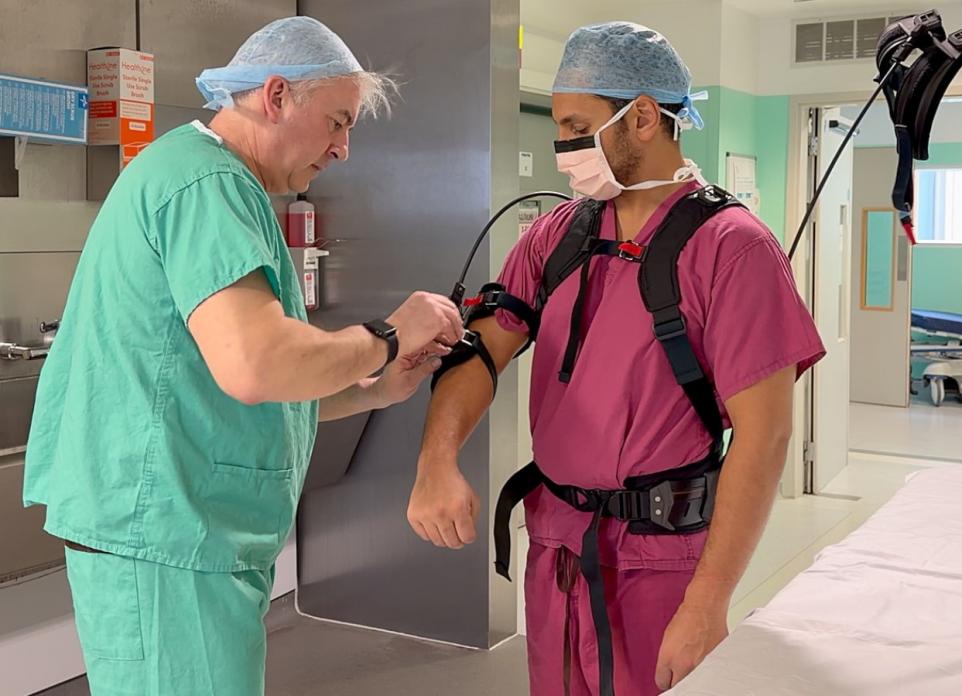
According to the Royal College of Surgeons, musculoskeletal injuries, muscle fatigue, and the development of back and neck pain are incredibly common amongst surgeons due to the demanding physical requirements of the profession.
Mr Kapil Sahnan, a colorectal surgeon at St Mark’s, was the first surgeon to operate wearing an exoskeleton device—a custom tailored suit designed to reduce muscle strain and fatigue during long surgeries. The device, designed by Stanley Handling, supported Mr Sahnan’s arms and shoulders for seven hours while he removed the ileoanal pouch of a patient with Inflammatory Bowel Disease.
By implementing the use of cutting-edge wearable technology, St Mark’s Hospital is ensuring that their world class clinicians are supported and therefore better able to provide long-term care to patients and improve surgical outcomes.
A New Artificial Intelligence Tool for Surgeons
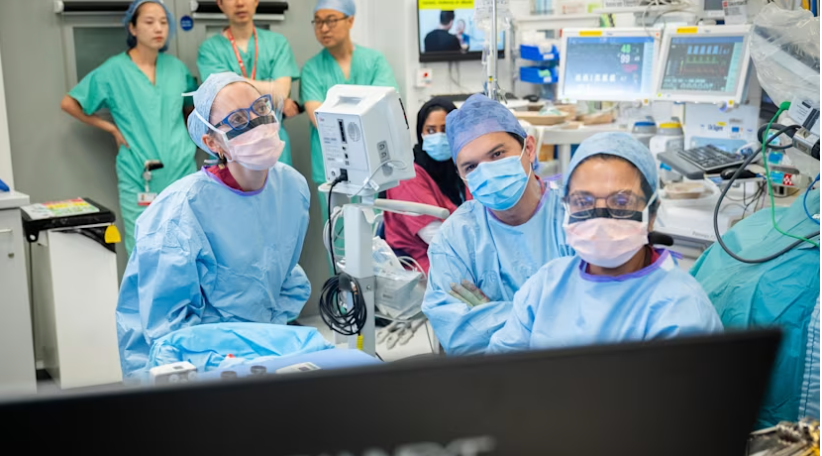
Surgeons at St Mark’s Hospital were one of the first medical teams in the UK to use a new artificial intelligence system that colour codes internal anatomy during live surgery.
The technology, known as the Eureka system, analyses the surgical field in real time and overlays colours onto structures such as nerves, connective tissue, and other critical anatomical features. By doing so, it aims to enhance precision, reduce the risk of accidental injury, and support surgeons during complex procedures.
The system was used for the first time in June 2026 during a bowel resection on a woman in her 60s with Inflammatory Bowel Disease. The hope is that such technology will reduce complications, shorten operating times, and improve outcomes across a wide range of procedures. Early use suggests the system can identify structures faster than the human eye, offering a safety net during intricate dissections.
St Mark’s Hospital is working with partners to develop more uses for the device and evaluate the system’s impact. While still in its early stages, the technology has the potential to become a standard tool in operating theatres worldwide.